Last Updated:
Bigg Boss fights may be pure entertainment, but a psychologist explains why our brains get hooked on the chaos, pick sides and even enjoy seeing “justice” served.




Bigg Boss 20 is all set to bring back the drama, but why do viewers get so invested in watching strangers fight?
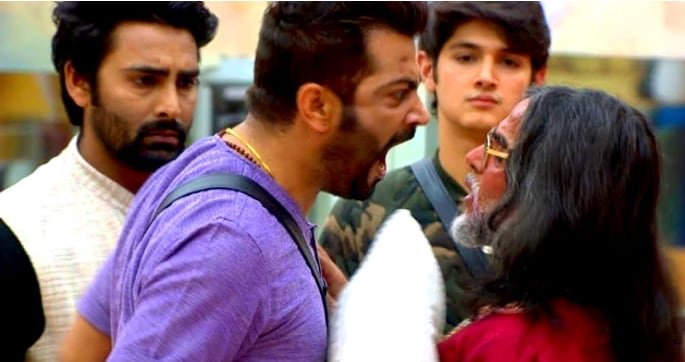
You know that moment when a Bigg Boss contestant starts screaming at another contestant and you suddenly forget everything else you were doing? You’re not in the house. You don’t know these people. You probably didn’t even know they existed a few weeks ago. And yet, there you are choosing sides, getting angry, defending your favourite and waiting to see who gets exposed next.
With Bigg Boss 20 around the corner, the cycle is about to begin all over again. But have you ever wondered why are we, sitting safely on our couches, so invested in the chaos?
According to psychologist and classical artist Nikita Charan, our obsession with watching strangers fight has a lot to do with how our brains are wired. In an exclusive conversation with CNN-News18 Showsha, she breaks down why a good reality-show fight can be far more psychologically satisfying than we might want to admit.
Why Do We Immediately Pick A Side?
Ever noticed how difficult it is to watch a Bigg Boss argument and remain completely neutral? According to Charan, there is a reason for that. “Evolutionarily, human beings are hardwired to look for social conflict. That has a lot to do with survival — knowing who has power and knowing who breaks rules,” she explains.
So when two contestants clash, we aren’t necessarily watching like detached observers. We start asking ourselves: Who is right? Who crossed the line? Who deserves to be called out? And that is where our moral compass kicks in.
“When you’re watching two people who you’ve never met, you’re not just going to pick them objectively,” Charan says. “It is also a reflection of our moral compass… how we see ourselves and how we perceive right and wrong.”
Also Read: Bigg Boss 20: Salman Khan Starts Grand Premiere Shoot, His Cowboy Hat Look Grabs Attention | PHOTOS
It’s Basically A Roller Coaster But We Can Get Off
There is also something undeniably thrilling about watching conflict when you’re nowhere near it. Charan compares it to an emotional roller coaster, except this one comes with an emergency exit.
“You can observe the conflict and the negative emotion happening, but you have zero involvement and zero personal risk,” she says. This is where benign masochism comes in, the idea that we can enjoy experiencing something unpleasant when we know we’re actually safe. A Bigg Boss fight can give viewers that rush of cortisol and adrenaline, along with dopamine, without any of the real-world consequences.
Why Does Someone Getting “Exposed” Feel So Good?
Now comes the slightly awkward question. Why do viewers sometimes cheer when a contestant is humiliated, exposed or finally defeated? That can be schadenfreude which simply means pleasure at someone else’s misfortune. But Charan says there is more to it than simply enjoying somebody else’s suffering.
Also Read: Bigg Boss 20 Full Contestants List: Mary Kom, Isha Rikhi, Mahhi Vij, Rhiya Ahir And More
“Yes, this is an example of schadenfreude, but that comes from our innate need for the restoration of universal or cosmic justice,” she explains.
“You’re deriving pleasure from your own inner compass being satisfied because you view things as right or wrong,” Charan adds.
Sometimes, We’re Living Through The Contestants
Reality TV can also let us experience emotions we might normally keep under wraps. Nikita Charan describes it as an “emotional surrogate.”
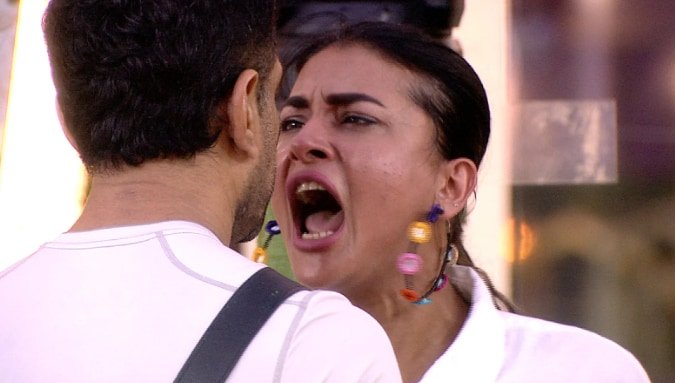
“When you’re watching a reality TV show when a contestant flips a table, maybe, or delivers a very sneering or venomous remark, there’s a part of you that feels it or resonates with it,” she says.
Why? Because these can be the “shadow parts” of ourselves that polite society doesn’t exactly encourage us to express.
Watching someone else do it can provide a strange sense of release. “Sometimes there are things that we don’t have the strength to do or to express,” Charan says, adding that even anger can be healthy when expressed appropriately. “Always suppressing it is not.”
And Yes, Their Mess Can Make Us Appreciate Our Own Lives
Then there is the guilty little thought that occasionally crosses our minds while watching reality TV: Well, at least my life isn’t this chaotic. But Charan says this isn’t necessarily about feeling superior. It can actually create gratitude. “Sometimes it takes watching the actual play out of certain conflicts and their consequences for us to really realise how good we have it,” she says.
Interestingly, gratitude and empathy can exist at the same time. “We can empathise for how bad we feel for someone while still feeling grateful that we are not in their shoes,” Charan adds.
So, when Bigg Boss 20 contestants start fighting and you find yourself glued to the screen, don’t be too hard on yourself. You may not actually care about these strangers as much as you think. You might simply be watching your own ideas about right, wrong, justice, anger and human behaviour play out through them.
Quick Answers
 Ask News18
According to psychologist Nikita Charan, humans are hardwired to seek social conflict for survival, which involves identifying power dynamics and rule-breakers. This evolutionary trait causes viewers to engage their moral compass and choose sides during arguments on reality TV shows like Bigg Boss.
Ask News18September 05, 2026, 16:18 IST